Maslow's Hierarchy of Needs
Maslow's hierarchy of needs is a model that implies that we must meet our most basic needs before we can pursue higher needs. Our fundamental needs have the highest priority, and we cannot achieve higher objectives until they are satisfied. Recognizing which of yours needs and the needs of others met will help you relate to others by understanding more of their perspective and opportunities to develop.
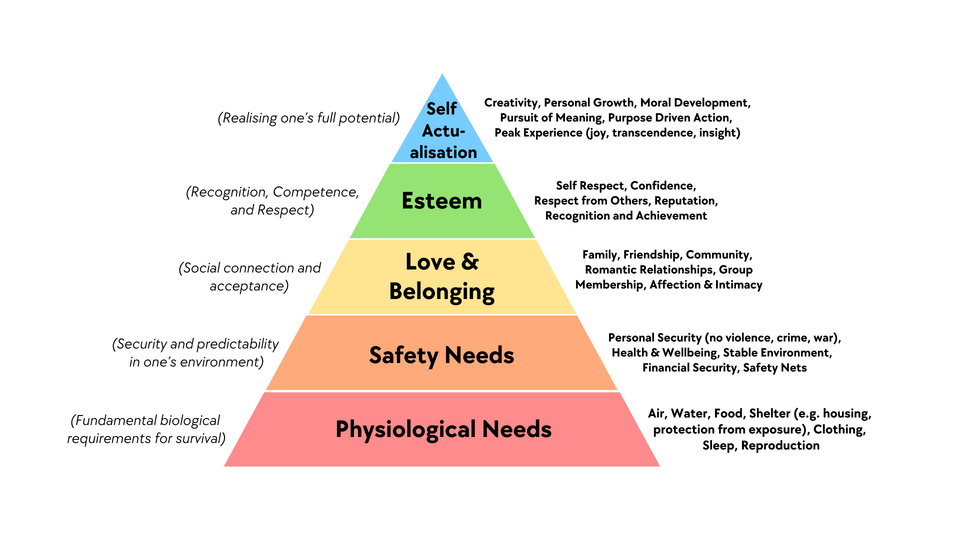
We can visualize the hierarchy of needs as a pyramid. At the base is our
- physiological needs, such as for sustenance. Until we meet our physiological needs, we may engage in behaviors that do are inconsistent with other needs. For example, we may risk safety to acquire food or water, where
- safety is the next level in the pyramid. Once we have achieved a sufficient sense of safety, we can pursue our need for
- love and social engagement. In other words, while we are in unsafe circumstances, we find it difficult or impossible to properly engage with others to obtain intimacy, trust, and acceptance. Only after meeting our social needs can we pursue our requirements to develop
- esteem by respecting others and achieving the same for ourselves. Then, we can pursue our
- cognitive needs including creativity, curiosity, and purpose, after which we can begin to address
- aesthetic needs for appreciating and creating beauty. The seventh level of need, for
- actualization, refers to the ability to realize our complete and unique individual human potential, which means being our best selves. The final level of need is
- transcendence, which refers to spiritual needs, which we can conceptualize as integrity and meaning.